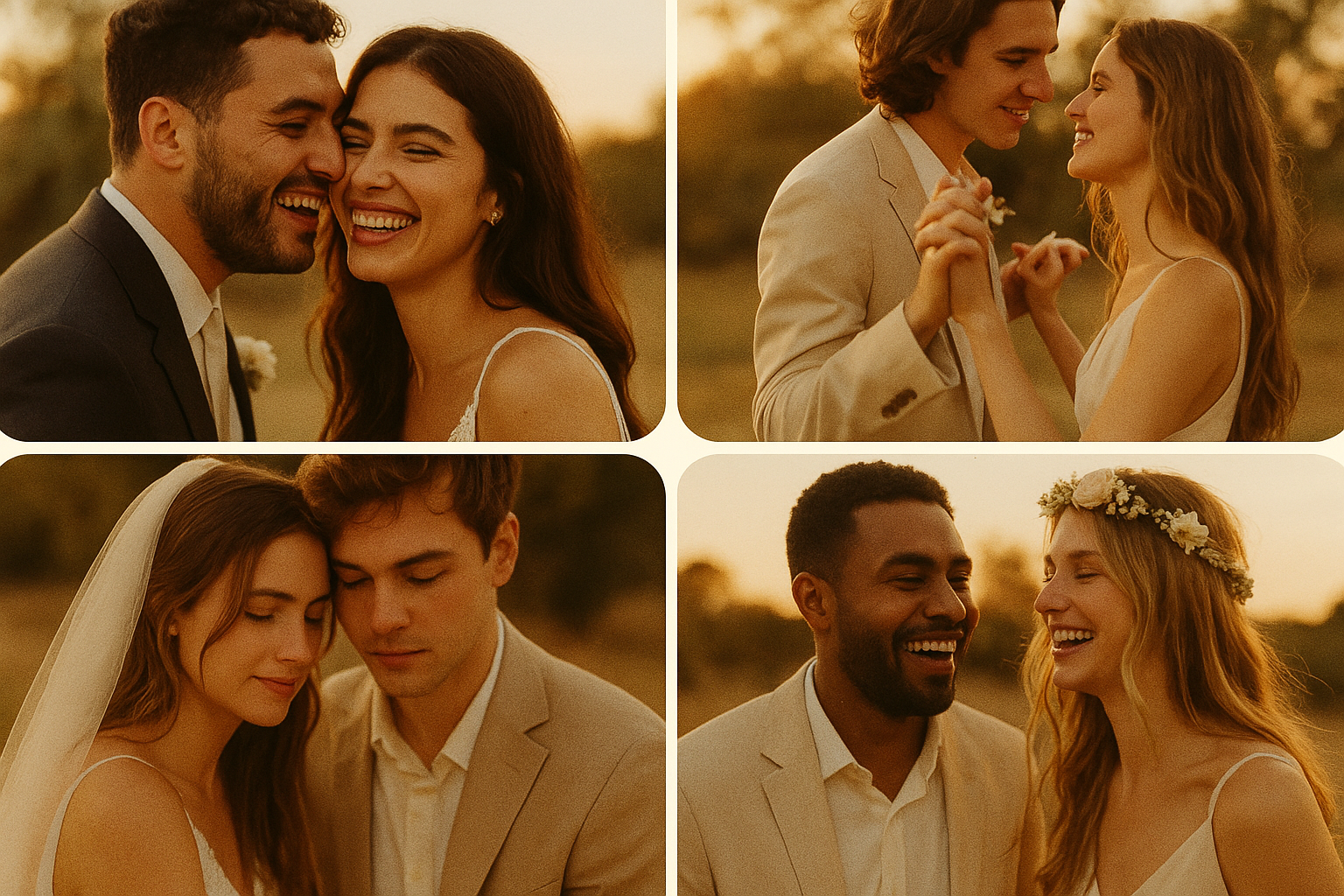
Gen Z is getting married — and they are doing it completely differently. Not slightly differently. Not "modern twist on tradition" differently. Actually, genuinely, throw-out-the-rulebook differently. The couples getting engaged right now grew up on Instagram, came of age on TikTok, and have been quietly watching millennials spend $40,000 on weddings that looked great in photos but left them exhausted and in debt. They decided early: not us. Gen Z wedding trends in 2026 are less about impressing guests and more about actually experiencing the day. That shift sounds small. It is not.
Why Traditional Wedding Planning Feels Wrong to Gen Z Couples
Here is the tension most couples in this generation feel but struggle to name. They grew up seeing weddings performed for an audience. Big venues. Elaborate centerpieces. Rigid timelines. Seating charts that took three weeks to finalize. And at the center of it all — a couple who barely got to eat, barely got to talk to each other, and spent the entire day managing logistics instead of living the moment. Gen Z watched that happen to older siblings, cousins, parents. They filed it away.
So when it comes time to plan their own weddings, they feel a pull in two directions. Part of them still wants the magic — the dress, the dancing, the photos, the feeling of marking something that matters. But another part of them is deeply allergic to the performance of it all. The pressure to execute a Pinterest-perfect event for 150 people they sort of know. The stress. The cost. The weeks of recovery afterward. They want the emotion without the production. The intimacy without the industry.
That tension is at the heart of every major shift happening in weddings right now.
What Gen Z Wedding Trends in 2026 Actually Look Like
The biggest trend is not a specific aesthetic or a particular vendor category. It is a philosophy. Gen Z couples are optimizing for feeling over appearance. They want their wedding day to feel like them — not like a template from a wedding blog. That shows up in ways that are sometimes subtle and sometimes radical.
Micro-weddings and elopements have fully crossed over from niche choice to mainstream option. Gen Z is not eloping because they cannot afford a big wedding. Many of them are choosing intimacy on purpose. Twenty people at a vineyard. Twelve people at a cabin in the mountains. A ceremony at sunset with just the people who genuinely matter, followed by a dinner that actually feels like a dinner. The guest list is getting smaller and the emotional weight per person is getting heavier — in the best way.
Non-traditional venues are everywhere. Bookstores. Art galleries. State parks. Rooftop gardens. Backyards that have been transformed into something cinematic. The ballroom and the country club are not gone, but they have lost their default status. Gen Z couples are asking themselves what location actually reflects who they are as a couple — and then booking that, even if it requires more creative logistics.
The aesthetic has shifted too. The vintage and film-inspired look that has been building for a few years is now fully dominant among this generation. Warm tones. Grain. Real light. Photos and videos that look like they were pulled from a memory rather than assembled in a studio. The sharp, high-gloss, over-edited look feels cold to them. They want their wedding footage to feel like a feeling, not a product.
Music choices are more personal and more varied. Gen Z couples are not defaulting to the standard wedding playlist. They are writing their own. First dances to indie artists their guests have never heard of. Ceremony music that means something specific to their relationship. Receptions that feel like a party they would actually attend, not a wedding reception they are contractually obligated to enjoy.
And food is having a moment. The formal plated dinner is losing ground to formats that encourage movement and conversation — taco stations, grazing tables, food trucks parked outside a barn, late-night snacks that arrive when the dancing peaks. The goal is a reception that feels alive, not one that feels catered in the most corporate sense of the word.
How Are Gen Z Couples Thinking About Wedding Content and Social Media?
This is where things get genuinely interesting — and genuinely new. Gen Z has a complicated relationship with social media at weddings. They grew up on it. They are fluent in it. But they are also the generation that started asking hard questions about what it costs to perform your life online. So the way they approach wedding content is more intentional than any generation before them.
Many Gen Z couples are hiring wedding content creators specifically so they can put their phones away. The logic is elegant: if someone else is capturing the candid moments in real time, you do not have to. You get to actually be at your wedding. The content exists, it is beautiful, it is ready to post — and you were present for the thing that produced it. That trade feels worth it to them in a way it might not have to older generations.
They also want footage that is honest. Not staged. Not posed. Not the version of their wedding that looked good — the version that felt good. The laugh that happened during the vows. The moment on the dance floor when everyone lost it. The quiet two minutes between the ceremony and the reception when they stood together and exhaled. The footage couples actually post is not the grand reveal or the perfect first look. It is the real stuff. Gen Z knows this instinctively.
Delivery speed matters to them in a way that is distinctly generational. They want to share content while the emotion is still fresh — not wait three months for a full film. Same-day or next-day delivery is not a luxury for this audience. It is increasingly an expectation.
What Does Gen Z Actually Want From Their Wedding Vendors?
The vendor relationship has changed too. Gen Z couples are not passive clients. They have done the research. They have watched hundreds of videos, read dozens of reviews, and formed strong opinions before they ever send an inquiry. What they want from vendors is honesty, personality, and a sense that the person they are hiring actually understands them — not just the industry they are operating in.
They respond to vendors who communicate clearly online, who show their actual work rather than their most polished work, and who have a defined aesthetic and point of view. A vendor who is good at everything feels generic to a Gen Z couple. A vendor who is clearly excellent at one specific thing — and that thing matches what they want — feels like a find.
They also respond to vendors who are honest about what they do not do. A videographer who says "I do not do traditional ceremony-to-reception highlight reels — I capture the emotional texture of a day in short, intimate films" is more compelling to this audience than one who promises to cover everything. Specificity builds trust. Generality does not.
Reviews matter enormously, but not just star ratings. Gen Z reads the words. They look for patterns. They want to know how a vendor handled something unexpected, how they communicated when things got complicated, how the couple felt during the experience — not just afterward. What brides wish they had known before booking is exactly the kind of content this generation seeks out before they make any decision.
The Reframe: It Is Not About Doing Less — It Is About Doing What Is Real
There is a version of the Gen Z wedding trend story that frames it as minimalism or budget-consciousness. That misses the point. Gen Z couples are not just doing less. They are doing what is real to them. Some of them are spending significant money — on a chef-driven private dinner for thirty people, on a film photographer who books up eighteen months in advance, on a content creator who will be with them from getting ready through the last dance. They are not cutting corners. They are cutting the things that never meant anything to them in the first place.
The result is weddings that feel more personal, more present, and more emotionally honest than anything a larger production could manufacture. The intimacy is not incidental. It is the whole point.
If you are planning a wedding in 2026 and something about the traditional path has always felt slightly off to you — trust that feeling. Gen Z wedding trends in 2026 are not a reaction against weddings. They are a return to what a wedding is actually supposed to do: mark a moment between two people in a way that is true to who they are.
What Couples Are Saying After They Do It This Way
The feedback from couples who have taken the more intimate, presence-focused approach is remarkably consistent. They talk about how the day felt like theirs. How they actually remember it. How the footage, when it came back, made them cry — not because it was beautiful in a generic way, but because it was real in a specific way. Moments they had forgotten. Sounds they did not know were captured. The texture of the day, preserved.
The couples who went the other direction — who let the industry template take over, who spent the day executing a production — often describe a strange, hollow feeling afterward. The photos look great. The video is technically impressive. But something is missing. The feeling of having actually been there.
Gen Z is doing everything it can to avoid that outcome. And the vendors, venues, and formats they are choosing in 2026 reflect that with every decision.
Ready to Plan a Wedding That Actually Feels Like You?
If you want footage that captures the real moments — not the posed ones, not the performed ones, but the ones that actually happened — we would love to talk. Our approach is built for couples who want to be present on their wedding day and still walk away with something beautiful to share.
Check Availability and let us know what you are planning. We will take it from there.
Frequently Asked Questions
What are the biggest gen z wedding trends in 2026?
Gen Z wedding trends in 2026 center on intimacy, authenticity, and presence over performance. The most prominent shifts include smaller guest lists, non-traditional venues, film-inspired aesthetics, fast content delivery, and a strong preference for vendors who have a distinct point of view rather than a generic portfolio.
Are Gen Z couples spending less on weddings?
Not necessarily. Many Gen Z couples are reallocating rather than reducing — cutting the elements that feel performative and investing more in the parts that feel personal. A smaller wedding with a great chef, a talented film photographer, and a content creator can cost as much as a traditional mid-range wedding.
Why are Gen Z couples hiring wedding content creators?
The main reason is presence. Having a dedicated content creator means Gen Z couples do not have to worry about capturing the day themselves — they can actually live it. They get candid, real-time footage that is ready to share quickly, without spending the day staring at a phone screen.
What kind of wedding video aesthetic do Gen Z couples prefer?
Warm, grainy, film-inspired footage is consistently the preference — the kind that feels like a memory rather than a production. Gen Z couples tend to avoid sharp studio lighting, over-edited color grades, and anything that looks like a commercial. They want their footage to feel honest and emotionally present.
How important is fast delivery of wedding footage to Gen Z couples?
Very important. Gen Z couples want to share while the emotion is fresh, which makes same-day, next-day, or 24-to-72-hour delivery a significant factor in how they choose vendors. Waiting months for a highlight reel feels misaligned with how this generation relates to content and memory.
Are gen z wedding trends in 2026 a passing phase or a permanent shift?
Most indicators suggest this is a structural shift rather than a trend cycle. The values driving these choices — authenticity, intimacy, presence — are deeply held generational traits, not aesthetic preferences that will flip in a year. The wedding industry is beginning to adapt accordingly, and the vendors who understand this early will be the ones Gen Z couples seek out.