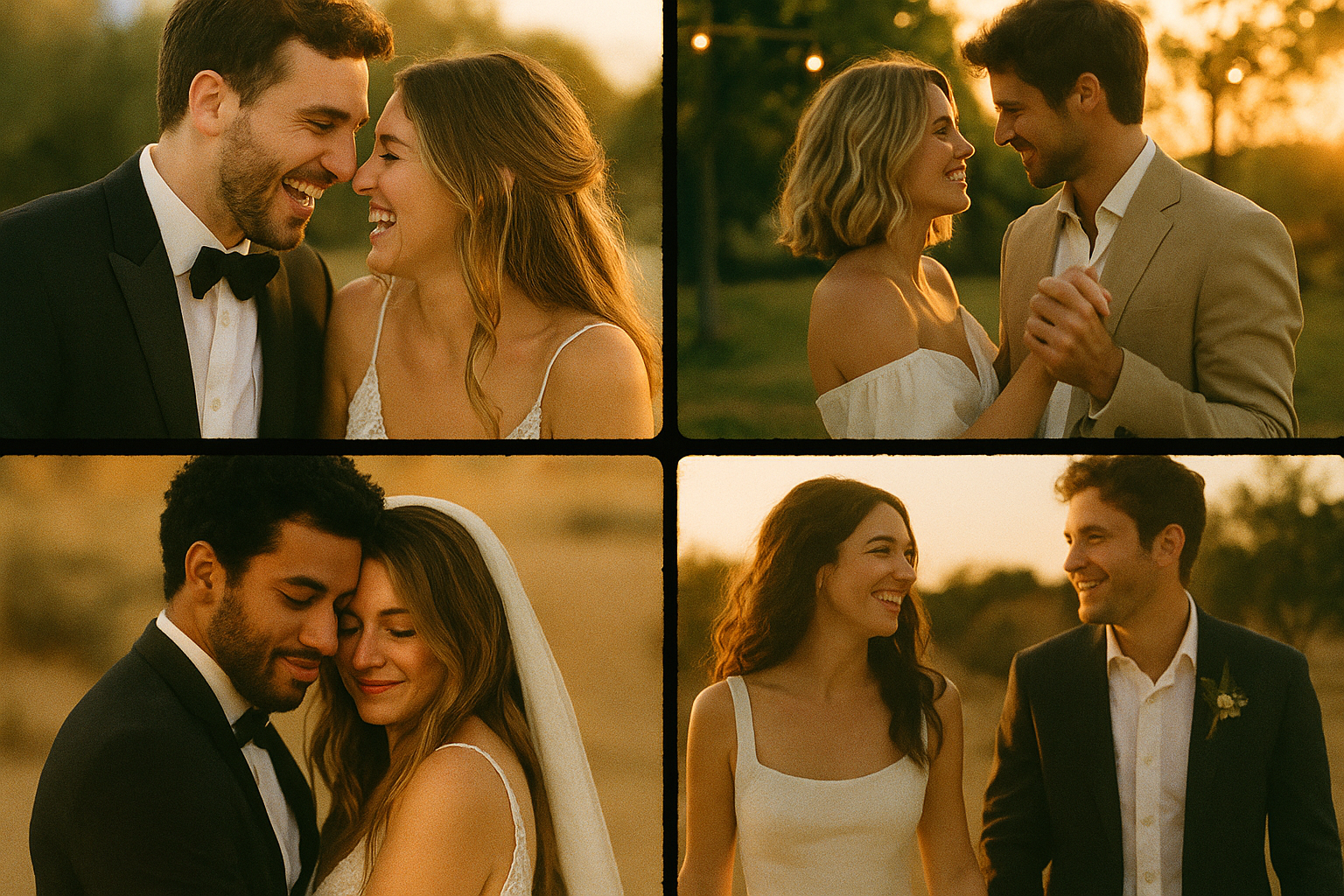
The most-shared wedding clip of the past year wasn't a sweeping drone shot. It wasn't a slow-motion kiss at the altar. It was a groom watching his bride walk toward him — raw, shaky, slightly out of focus — and it had 2.4 million views before the honeymoon ended. That tells you everything about what popular wedding footage on Instagram in 2026 actually looks like. It doesn't look polished. It looks real.
Why Most Couples End Up with Footage They Can't Use Online
Here's the thing nobody warns you about when you book your wedding video. You spend months planning every detail. You hire a talented videographer. You wait six to twelve weeks for delivery. And then you finally open that file, and you realize — this isn't made for Instagram. It's made for your living room TV. The cinematic four-minute film is stunning. But it's 1080p horizontal, it's slow, and by the time anything emotionally interesting happens, a social media viewer has already scrolled past.
This is the quiet frustration a lot of couples don't talk about until after the wedding. They imagined sharing moments as they happened — or at least within a day or two. Instead, they're sitting on footage they love but can't easily use, waiting on an edit that wasn't designed for the platforms where their friends and family actually live. If you've felt that tension between wanting something beautiful and wanting something shareable, you're not alone. What Brides Wish They Knew Before Booking Wedding Videography covers exactly this gap — the expectation versus reality of traditional wedding video.
What Couples Have Tried (And Why It Falls Short)
A lot of couples try to solve this themselves. They take screenshots from their videographer's preview. They crop horizontal footage into a vertical frame and lose half the shot. They film their own behind-the-scenes moments on an iPhone, which works fine but doesn't capture the moments they actually cared about — the first look, the vows, the first dance. Some hire a wedding content creator as an add-on, but book them too late or without clear direction, and end up with a phone-filmed montage that doesn't match the mood of the day.
The real problem isn't effort. It's format. Traditional wedding videography was never built for social media. It was built for a different era of wedding memory-keeping, one where the goal was a single beautiful film you'd watch on anniversaries. That's still valuable. But it's not the only thing couples want anymore. How Wedding Social Media Is Changing What Couples Book in 2026 goes deep on exactly how that shift is reshaping the entire industry.
What Does Popular Wedding Footage on Instagram in 2026 Actually Look Like?
If you spend any time studying what actually performs on Instagram right now, a few patterns become immediately obvious. Vertical format dominates — not because it's trendy, but because it fills a phone screen completely, and that full-screen presence changes how emotionally engaged a viewer feels. The clips that stop the scroll are short. Usually under sixty seconds. Often under thirty. They don't build slowly. They start in the middle of something that's already emotionally charged.
The most popular wedding footage on Instagram in 2026 tends to fall into a handful of very specific categories. Reaction moments are the biggest category by far — grooms reacting to their bride's entrance, parents seeing their daughter in her dress for the first time, the moment right after the ceremony ends when everyone exhales. These clips don't need to be long. Ten seconds of a groom's face as his bride appears at the end of the aisle will outperform a two-minute highlight reel almost every time.
Candid, in-between moments are the second major category. Not the posed portraits, not the formal first dance — the moment during the reception when the couple steals thirty seconds alone near the bar and someone catches them laughing. The flower girl spinning in circles by herself. The best man mouthing the words to the song during the reception. These clips feel intimate in a way that nothing else does. They have a warmth and imperfection that signals authenticity, which is exactly what Instagram's algorithm — and real human attention — rewards right now.
Behind-the-scenes content rounds out the top three. Getting ready footage, especially anything that captures genuine emotion rather than posed hair-and-makeup shots, consistently performs well. A bride reading her vows quietly to herself. The groomsmen helping tie a bow tie. A mother zipping up a dress while trying not to cry. These moments are everywhere on a wedding day, and most traditional videographers aren't positioned to capture them because they're focused on the ceremony timeline.
Why the Format Matters as Much as the Moment
Even the best moment in the world won't perform if it's delivered in the wrong format. This is where a lot of couples still get tripped up. A beautifully filmed horizontal clip uploaded to Instagram Reels loses its emotional impact because the viewer has to mentally adjust to the format. Vertical content — shot intentionally for a 9:16 frame — feels native. It feels like it belongs. And on a platform built for scrolling, belonging is everything.
This is also why the timing of delivery matters more than most couples realize. The first 48 hours after a wedding are the highest-engagement window you'll ever have. Your guests are still buzzing. Your followers are curious. The algorithm rewards recency. Footage delivered six weeks later — no matter how beautiful — enters a social media world that has moved on. What to Expect From a Wedding Video Delivered in 24 Hours breaks down exactly what fast turnaround looks like in practice and why it changes how couples experience their footage entirely.
How Couples Are Actually Getting This Right
The couples who are winning on Instagram in 2026 aren't necessarily the ones with the biggest budgets or the most elaborate weddings. They're the ones who thought about social media content as its own distinct category before the wedding day — not as an afterthought. They booked someone specifically to capture vertical, phone-native footage alongside their traditional videographer. They communicated which moments mattered most. They had a plan for what they'd post and when.
What this looks like practically is having a dedicated wedding content creator on the day — someone whose entire job is to move through the wedding with a phone or a small camera and capture the candid, in-between, reaction-heavy moments in vertical format, ready to post. Not the polished cinematic film. The stuff that actually lives on social. The delivery timelines are different too. Where a traditional wedding film takes weeks, social-ready clips can be in a couple's hands within hours or by the next morning.
The couples who've done this consistently describe the same experience: they woke up the morning after their wedding and actually had something to post. Not a blurry screenshot. Not a cropped horizontal frame. Real, beautiful, emotional footage that looked intentional and felt like them. The comments that followed weren't generic congratulations — they were people saying they cried, people tagging their own partners, people sharing the clips to their own stories. That kind of organic reach doesn't happen by accident. It happens when the footage was made with that outcome in mind from the start.
What Couples Say After They Get Social-Ready Footage Back
The feedback pattern is remarkably consistent. Couples who receive fast-turnaround, vertical, social-optimized footage describe a feeling of being fully present in their wedding week rather than waiting. There's no anxious refreshing of an inbox six weeks later. There's no disappointment when the footage arrives and doesn't match the vision they had for sharing. Instead, there's this immediate sense of the day still living — the emotions still fresh, the footage in their hands before the feeling fades.
One bride described watching her groom's reaction clip on her phone the morning after and crying all over again — not because the moment had passed, but because it was right there, still vivid, still hers to hold. That's what popular wedding footage on Instagram in 2026 is really about. It's not about views or likes, though those happen too. It's about keeping the day alive in a format that travels — that gets sent to grandparents who couldn't attend, shared in group chats, saved by bridesmaids for their own future weddings. The best wedding footage doesn't sit on a hard drive. It moves.
If you want footage that's made to move — captured intentionally, delivered fast, formatted for the way you actually share your life — Check Availability and let's talk about what your wedding day could look like from the start.
Frequently Asked Questions
What type of wedding footage performs best on Instagram in 2026?
The most popular wedding footage on Instagram in 2026 tends to be short vertical clips — under sixty seconds — that capture genuine reaction moments, candid in-between scenes, and behind-the-scenes emotion. Groom reactions, parent reactions, and unscripted moments consistently outperform polished highlight reels in both reach and engagement.
Do I need a separate wedding content creator in addition to a videographer?
For most couples who care about social media, yes. A traditional videographer is focused on delivering a cinematic film — a different product entirely. A wedding content creator captures vertical, phone-native footage in real time and can deliver it within hours rather than weeks. The two roles complement each other rather than overlap.
How soon after the wedding can I expect social-ready footage?
It depends on who you book. Some wedding content creators deliver same-day or within 24 hours. Others offer 48 to 72-hour turnaround. The key question to ask before you book is whether delivery timing is guaranteed and what format the footage will arrive in. Fast delivery only matters if the format is right.
Is popular wedding footage on Instagram in 2026 different from what worked in previous years?
Yes and no. Emotional, authentic moments have always performed well. What's changed is the dominance of vertical short-form content — Reels over static posts, raw candid over posed — and the expectation of speed. Couples in 2026 expect to post during or immediately after the wedding, not weeks later when the moment has passed.
What should I tell my wedding content creator to focus on?
Prioritize reaction moments above everything else — especially the groom's first look, parent moments, and the end of the ceremony. After that, ask them to focus on candid in-between moments: the quiet ones, the funny ones, the ones no one planned. Give them a list of your five most important moments so they know where to be.
Will my wedding footage still be shareable if I don't post it immediately?
You can absolutely post wedding footage later, but engagement tends to drop significantly after the first 48 to 72 hours. The window when your audience is most emotionally primed — right after the wedding — is the highest-value moment for sharing. Footage that arrives weeks later still has value, but it doesn't carry the same immediate energy or algorithmic recency boost.