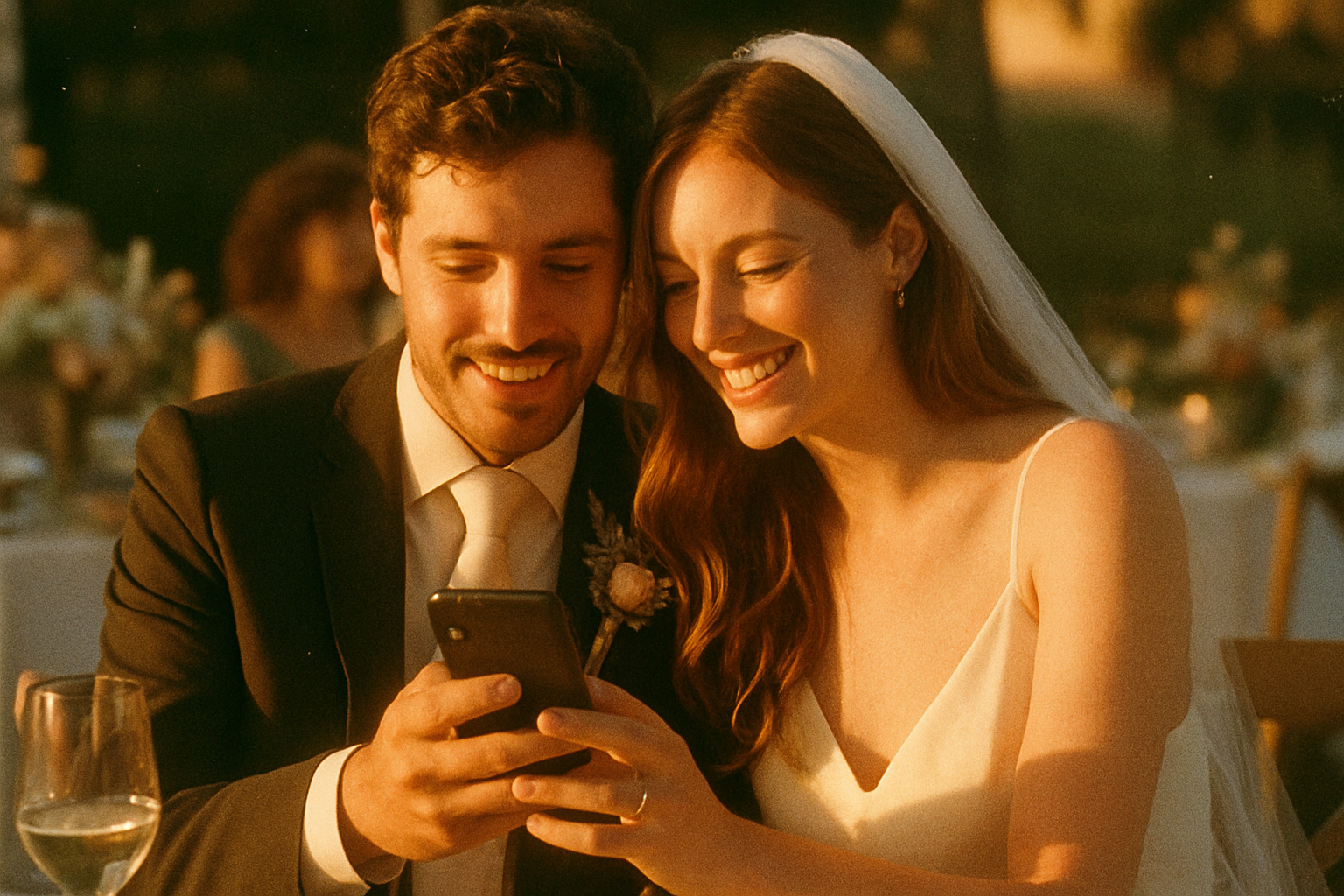
Most couples planning a wedding in 2026 are not finding their vendors through bridal fairs or word of mouth. They are finding them through a fifteen-second video on TikTok that made them feel something. That shift is not a trend. It is a structural change in how wedding decisions get made, and it is reshaping which vendors get booked and which ones sit empty on Saturdays. Wedding social media changing bookings in 2026 is not a niche observation — it is the single biggest force rewriting the wedding industry right now.
The old booking model no longer matches how couples actually plan
For years, the wedding industry ran on a fairly predictable rhythm. Couples got engaged, visited a bridal show, flipped through magazines, and booked vendors 12 to 18 months out. Photographers and videographers held the most prestige, commanded the highest fees, and stayed booked solid. That model assumed couples had patience, trusted institutions, and wanted a finished product delivered months later.
None of those assumptions hold the same way anymore. The couple getting engaged today grew up on Instagram and TikTok. They have spent years consuming short, emotionally immediate content. They know what good footage looks like. They have already saved fifty videos to a Pinterest board before they have even chosen a venue. And when they watch a wedding video and feel something, they want to share it immediately, not in six months when the memory has gone cold.
This is not a complaint about a younger generation. It is a description of a different set of expectations. The couples booking weddings now want content that fits the way they already live. And the vendors who understand that are filling their calendars. The ones who do not are wondering why their inquiry forms have gone quiet.
Why the traditional wedding video no longer serves the moment
Traditional wedding videography produces something beautiful. A 20-minute cinematic film with a narrative arc, colour grading, licensed music, and months of careful editing is genuinely impressive. The problem is not the quality. The problem is the timing and the format.
A couple gets married on a Saturday. Monday morning, their phones are full of messages from family and friends asking if there is any footage yet. The feeling is still alive. The emotion is still immediate. But the videographer who charged $5,000 will not deliver anything for three to four months. By the time the film lands in the couple's inbox, the urgency to share has faded. Life has moved on. The video gets watched once, maybe shared once, and then filed away.
Meanwhile, couples who had a content creator present are posting clips the next morning. Their friends are watching and saving and sharing. The moment is still warm. That is the gap that wedding social media has opened up, and it is why what couples book is shifting so quickly.
What are couples actually booking differently in 2026?
The most visible change is the rise of the wedding content creator as a booked vendor category. These are not photographers pivoting slightly. They are a genuinely different type of hire — someone whose entire focus is capturing footage optimised for vertical social formats, delivered within 24 to 72 hours. If you want to understand the full definition of this role and why it emerged, what a wedding content creator actually does is worth reading before you book anything.
Beyond the new category itself, booking behaviour has changed in three concrete ways. First, lead times have compressed. Couples are booking content creators on two weeks' notice rather than twelve months out, because the category is still growing and availability exists. Second, discovery is happening entirely on social platforms. A couple finds a creator through a reel, clicks to an inquiry form, and books within days. The traditional referral chain has been shortened dramatically. Third, couples are allocating budget differently, moving money away from extended documentary films and toward faster, more shareable deliverables.
This is not a universal shift. Some couples still want a cinematic film. But the segment that does not is larger than it has ever been, and it is growing with each engagement season.
The failed solution most couples try first
When couples realise they want fast, social-ready content, many initially assume any iPhone-wielding friend or casual content creator will do the job. The logic is reasonable: the format is casual, the output is vertical video, so how much skill can it really require?
The answer is more than it looks. A friend with an iPhone does not know how to compose a shot in low light during a reception. They do not know which moments to anticipate, how to move through a crowd without disrupting the atmosphere, or how to pull usable audio from a ceremony. The footage often looks fine on the day and degrades badly when you try to post it. Compression artefacts, shaky handheld movement, and blown-out highlights are all problems that casual shooting creates and that professional training avoids.
The other failed solution is asking a traditional videographer to deliver faster. Most cannot. Their workflow is built around extended post-production. Asking for a 48-hour turnaround on a four-hour shoot is not a small request, and many will decline or deliver something undercooked. The structure of traditional videography was never designed for speed. Bolting speed onto it does not work cleanly.
The real problem is a false choice
Couples have been told, implicitly or explicitly, that they have to choose between quality and speed. Either you hire a traditional videographer and wait months for something beautiful, or you hire someone casual and get something fast but mediocre. That framing is wrong, and it is the reason so many couples either overspend on something they cannot use immediately or underspend and end up with footage they are embarrassed to post.
The actual gap in the market is a vendor who uses professional cameras and knows how to use them, films across multiple mediums to keep subjects relaxed, and delivers within 72 hours. That combination does not require choosing between craft and speed. It requires a different production model, built around social delivery from the start rather than retrofitted onto a cinematic workflow.
This is precisely where wedding social media changing bookings in 2026 has created a legitimate new market position, not just a trend. The couples driving this shift are not asking for less. They are asking for something different, and the vendors who have built specifically for that ask are the ones growing fastest right now.
How a multi-medium approach solves the quality-speed problem
The approach that actually works involves filming with professional cameras alongside iPhones, sometimes with Super 8 or analog formats added for texture and warmth. Each medium serves a different purpose. The professional camera preserves image quality and provides the compositional foundation. The iPhone puts people at ease, because a phone pointed at someone reads as casual rather than formal. The moment a professional camera appears, some people stiffen. An iPhone in a crowd is invisible. Used together, you get footage that is technically sound and emotionally natural.
This is not a compromise. It is a deliberate creative decision. The output carries the grain and warmth of candid documentation without sacrificing the resolution or colour information that makes footage worth keeping. Couples can post it the morning after and still have something that holds up on a large screen years later.
The 72-hour delivery window is possible because the editing is built for social formats from the start. There is no extended narrative film to construct. The deliverables are short, shareable clips that capture the emotional highlights: a first look, a burst of laughter during speeches, a quiet moment between the couple just before walking in. These are the moments that perform on social and that couples actually want to relive.
What real couples say about choosing this model
The feedback from couples who have chosen this approach over traditional videography follows a consistent pattern. They describe forgetting the cameras were there. They talk about watching the footage back and crying, which is notable because the format is social-first, not cinematic. Several have said they find something new each time they watch it, which suggests the footage captures genuine moments rather than staged ones.
One response that comes up repeatedly is some version of: "I never thought I wanted a videographer until I saw this." That is significant. It means the format is reaching couples who had already written off video coverage entirely, because nothing they had seen felt like something they would actually want. The social-first model changed that calculus.
The availability factor also surfaces consistently. Couples who booked two weeks before their wedding describe being relieved that the category exists at all. Traditional videographers operating on 12 to 18 month booking windows are effectively invisible to anyone planning on a shorter timeline. That gap is real, and it is being filled.
What this means if you are planning a wedding now
If you are mid-planning and watching wedding social media to figure out what other couples are doing, you are already operating in the new model. The content you are consuming on TikTok and Instagram is not accidental. It is the output of a production approach built specifically for that format. The question is whether you want that for your own day.
The practical things to know: this type of coverage costs significantly less than traditional videography, typically $2,000 to $3,000 below the market rate for a full cinematic film. It is bookable on short notice. It delivers within 72 hours. And it does not require you to choose a style that feels foreign to how you actually consume and share content.
You can still hire a photographer for the lasting gallery. This sits alongside that, not instead of it. It fills the gap between what a photographer captures and what you actually want to post the day after your wedding.
If you want to understand how this fits into the broader shift in what couples are hiring, the difference between a content creator and a videographer lays out exactly how the two roles diverge and why both can make sense for the same wedding.
Dates book faster than most couples expect. If your wedding is within the next few months, it is worth checking availability before the calendar fills. Check Availability to see if your date is open.
Frequently Asked Questions
Is wedding social media content replacing traditional wedding videography?
Not for everyone. Some couples still want a cinematic film with a full narrative arc, and traditional videography serves that well. But wedding social media changing bookings in 2026 reflects a real and growing segment of couples who want fast, shareable content over a lengthy documentary. The two can coexist, and many couples now book both.
How quickly can I actually get footage after my wedding?
With a content creator using a social-first production model, 24 to 72 hours is realistic. That is enough time to post clips the morning after and share them while the feeling is still immediate. Traditional videographers typically work on 6 to 12 week timelines, sometimes longer.
What does wedding content creation actually cost compared to traditional videography?
Generally $2,000 to $3,000 less than a full cinematic film package. The difference reflects the scope of deliverables rather than a difference in quality of equipment or skill. You are paying for social-ready clips with fast turnaround, not a 20-minute edited feature.
How is a content creator different from just asking a friend to film on their iPhone?
A trained content creator knows how to compose shots, work in low light, anticipate moments, and move through a venue without disrupting the atmosphere. They also know how to film in a way that holds up technically, so the footage does not degrade when compressed for social platforms. An untrained iPhone shooter often produces footage that looks fine in the moment and disappoints when posted.
Does using a professional camera make people uncomfortable on camera?
It can. A professional camera on a tripod or shoulder rig signals formality and makes some people stiffen. Mixing in iPhone filming alongside professional equipment helps subjects relax, because a phone in a crowd reads as casual. The result is more natural footage without sacrificing image quality where it matters.
How far in advance do I need to book a wedding content creator?
Much less than traditional videography. While photographers and videographers in the cinematic category often book 12 to 18 months out, many content creators working in the wedding social media space are bookable on 2 to 4 weeks notice. That said, popular dates do fill, so earlier is still better.