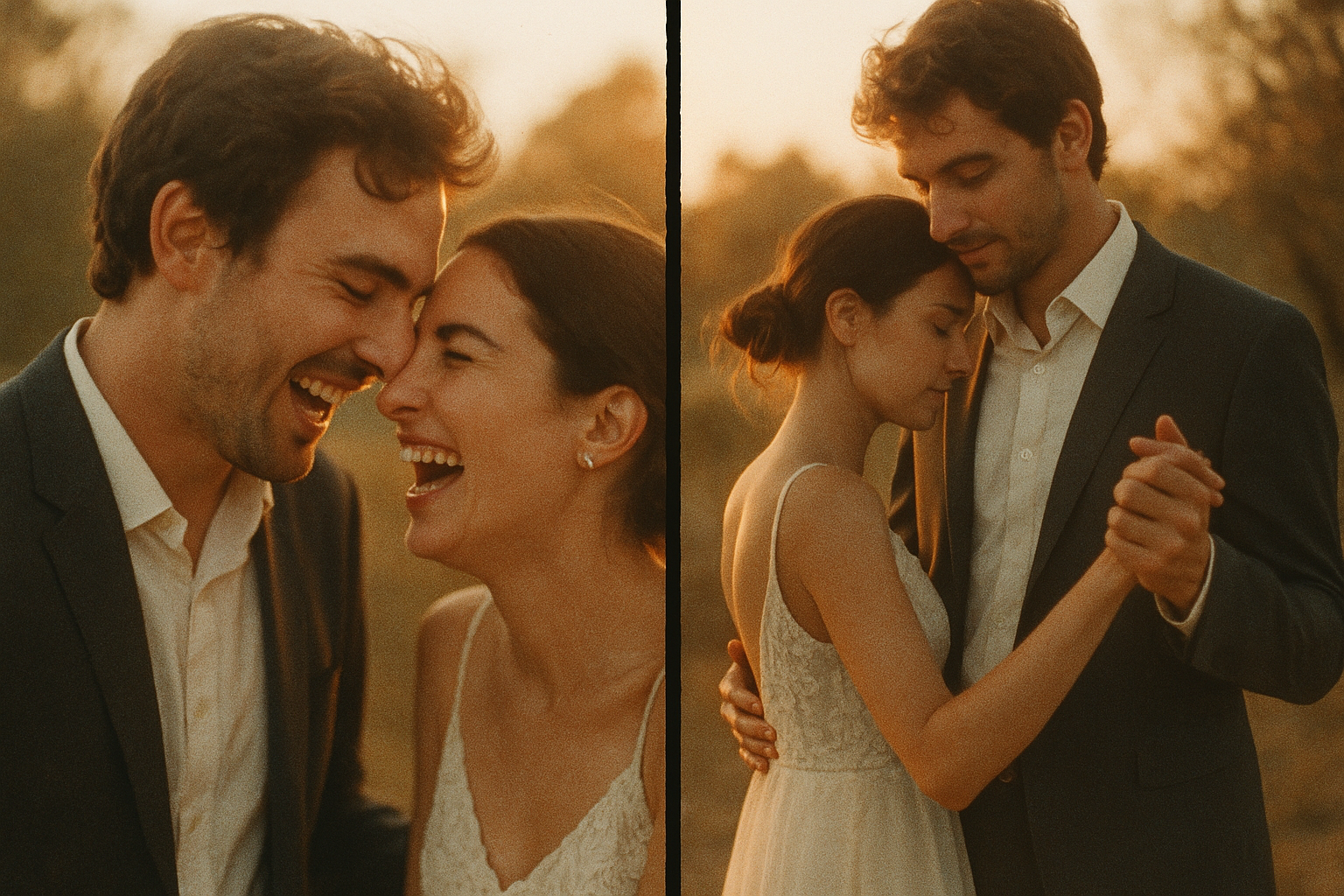
Most couples spend months planning the look of their wedding — the florals, the light, the venue, the mood. Then they get their photos and videos back and feel like they're looking at someone else's day. Everything is technically correct. The exposure is right. The composition is fine. But something is missing. The room felt like something. The footage doesn't. That gap between what the day felt like and what the camera captured is the real problem no one talks about when they start planning. And in 2026, with the intimate wedding aesthetic driving how couples design their entire day, that gap is more painful than ever.
Why the Intimate Wedding Aesthetic 2026 Is Different From Any Trend Before It
The intimate wedding aesthetic isn't just small weddings or minimalist décor. It's something more specific — and more felt. It's the warmth of a backlit moment during cocktail hour. It's two people laughing at nothing in particular while everyone else is still seated. It's the texture of the evening: golden, a little hazy, full of the kind of quiet that only happens when people feel genuinely comfortable. In 2026, couples are designing entire weddings around this feeling. They're choosing venues with warm natural light. They're cutting guest lists not for budget reasons but for intimacy reasons. They're saying no to anything that feels performative.
That's a real shift. For years, weddings were built for the grand reveal — the dramatic entrance, the sweeping landscape shot, the editorial-style portrait session. Those images photograph beautifully in a conventional sense. But the intimate wedding aesthetic 2026 couples are gravitating toward doesn't live in grand gestures. It lives in the in-between. The getting-ready laugh. The hand squeeze before the ceremony starts. The moment someone mouths something across the room and only one person knows what it means. Capturing that requires a completely different approach than most wedding filmmakers are trained to take.
What Goes Wrong When Couples Try to Plan for This Feeling
The most common mistake is treating intimacy like a visual style rather than an emotional state. Couples research warm-toned presets and film grain filters. They book venues with exposed brick and candlelight. They put "candid, natural" on their shot list. And then on the day, someone with a camera shows up and starts directing — move here, look there, turn toward the window. The images come back looking the part. But they feel staged. Because they were.
Another thing that backfires is over-relying on photographers or videographers who are technically excellent but aren't specifically trained in documentary-style capture. Wedding photography and wedding content creation are not the same skill set. Someone who is brilliant at composed portraits may not know how to disappear into a room. And disappearing is the whole job when you're trying to capture an intimate wedding aesthetic. If people can feel the camera, the camera has already failed.
Then there's the pacing problem. Most wedding timelines are built around production moments — first look, portraits, family formals, first dance. Everything in between gets treated as downtime. But the in-between is exactly where the intimate wedding aesthetic lives. The quiet walk from ceremony to reception. The moment the couple finally eats something. The group of friends huddled around a phone listening to a voice memo from someone who couldn't make it. Those scenes don't show up on a shot list. And if no one is watching for them, they're gone.
The Real Problem Isn't Your Venue or Your Photographer
Here's the reframe: intimacy isn't something you can design into a wedding. You can create the conditions for it. But it only happens when people forget they're being watched. Which means the single most important factor in capturing an intimate wedding aesthetic isn't the camera or the edit or the color grade — it's how present and invisible the person behind the camera can be at the same time.
That's a specific skill. It takes patience. It takes knowing when not to shoot. It takes the ability to read a room and sense that something is about to happen before it does — and then stay out of the way while it does. It also takes a relationship with the couple that starts long before the wedding day. When people trust the person holding the camera, they stop performing for it. That's when the real footage starts happening.
This is also why couples who care deeply about the intimate wedding aesthetic 2026 are increasingly booking wedding content creators in addition to — or sometimes instead of — traditional videographers. When a wedding content creator is done well, they become part of the day rather than a documenter of it. They're close enough to catch the real moments but light enough on their feet to never interrupt one.
How to Actually Capture the Intimate Wedding Aesthetic on Camera
The framework isn't complicated, but it requires intentionality at every stage — before, during, and after the wedding day.
Before the Wedding: Build Trust, Not Just a Shot List
The couples whose footage feels most alive are almost always the ones who had real conversations with their filmmaker before the day. Not about logistics. About feeling. What do you want to remember? What moments are you most afraid will go unnoticed? What does your relationship actually look and sound like when no one's watching? These aren't questions on a standard intake form. But they change everything about how a filmmaker shows up on the day. When you know what someone's laugh sounds like when they're genuinely happy versus politely happy, you know which one to wait for.
During the Wedding: Disappear on Purpose
Intimacy on camera requires physical and energetic invisibility. Small cameras help — the heavy, professional-looking rigs that signal "this is being documented" create self-consciousness the second someone sees them. Moving slowly and quietly through a space matters. So does knowing when to put the camera down entirely and just be a person in the room for a few minutes. Paradoxically, couples often feel more relaxed after they've had a few minutes of no visible filming — and that's when the best footage tends to happen.
Lighting choices matter enormously here too. Intimate aesthetics are destroyed by flash. Natural light, practical lights already in the venue, and sometimes a single soft fill are the whole toolkit. The goal is to work within the existing atmosphere of the space rather than overriding it. If a room is moody and candlelit, that's the film. Don't change it.
After the Wedding: Edit for Feeling, Not Coverage
The edit is where intimate footage either comes to life or gets buried under too much content. A common trap is trying to include every meaningful moment — which means none of them land with full weight. Intimacy in a final film often comes down to what you leave out. The pause before someone speaks. The cut that lets a moment breathe. Music that supports the emotional temperature of the footage rather than telling the viewer how to feel. The best wedding films made in the intimate aesthetic aren't cinematic in the traditional sense — they feel like a memory, which is a different thing entirely.
Couples who want to share footage quickly — the morning after, or within the first day or two — should talk to their filmmaker about what a fast-turnaround delivery actually looks like and how that affects the edit. A same-day or next-day clip is a different product than a full film, and both have their place. What matters is that even a short clip carries the warmth and texture of the day rather than just the highlights.
What Couples Actually Say After Getting This Kind of Footage Back
The feedback that comes back from couples who receive footage captured in the intimate style is remarkably consistent. They don't say "the lighting was beautiful" or "the angles were great." They say things like: "I didn't even know that moment happened." Or: "That's exactly how the day felt." Or the one that comes up more than any other: "I cried watching it because it actually felt like us."
That last one matters. Because the intimate wedding aesthetic isn't just a visual style — it's a claim about authenticity. Couples who invest in this approach aren't trying to make their wedding look a certain way. They're trying to make sure that when they watch this footage in ten years, it still feels true. That requires a filmmaker who understands the difference between documenting a wedding and witnessing one.
"I keep watching the part where my dad didn't know anyone was filming him. He was just standing there watching me dance with my husband and he had this look on his face. I would have never known that happened. That's the whole reason I'm glad we did this."
Moments like that one don't happen because of a shot list. They happen because someone was paying attention in the right way at the right time — and had a camera small enough, and a presence quiet enough, to catch it.
Is the Intimate Wedding Aesthetic Right for Your Day?
If your wedding is built around connection — fewer people, more meaning, a day that feels like yours rather than a production — then yes. The intimate aesthetic isn't just a trend. It's a philosophy about what weddings are actually for. And in 2026, more couples than ever are building their entire day around it, from the guest list to the venue to the person they trust with a camera.
If you're planning a wedding this year and the footage matters to you — not just for the gram, but because you actually want to remember how it felt — this is worth getting right from the start. The decisions you make before the day are what determine whether the camera captures the feeling or just the surface of it.
Check Availability to talk about your wedding date and what capturing your day in the intimate style would actually look like.
Frequently Asked Questions
What exactly is the intimate wedding aesthetic in 2026?
The intimate wedding aesthetic 2026 is less about a specific visual style and more about emotional authenticity on camera. It prioritizes candid, unposed moments — quiet laughter, real reactions, the in-between scenes — over grand cinematic set pieces. Couples who embrace it typically want their footage to feel like a memory rather than a production.
Do I need a small wedding to achieve the intimate aesthetic?
Not necessarily. While smaller guest counts do make it easier for a filmmaker to work invisibly, the intimate aesthetic is really about how the day is filmed, not how many people attend. A skilled documentary-style filmmaker can find and capture genuine moments at a wedding of any size.
How is a wedding content creator different from a videographer when it comes to intimate footage?
Wedding content creators typically work with smaller, less conspicuous equipment and are specifically trained in documentary and social-first capture styles. This makes them naturally suited to the intimate wedding aesthetic, where being invisible in the room is more valuable than operating heavy cinema gear. Many couples book both a traditional videographer and a content creator to cover different aspects of the day.
Can intimate-style wedding footage be edited quickly for same-day or next-day sharing?
Yes — in fact, short clips shot in the intimate aesthetic often perform better on social media than heavily produced highlight reels because they feel real. The key is having a filmmaker who knows how to select and trim footage quickly without losing the warmth and texture that makes the intimate wedding aesthetic work. Talking through delivery expectations before the wedding is essential.
What should I tell my filmmaker to make sure they capture this style?
Start by describing moments rather than shots — tell them about your relationship, the people who matter most, the kinds of things that happen when your family gets together. Ask them directly how they work in low-light conditions and whether they use flash. The most important thing is to have this conversation early, so they arrive on the day already knowing what to watch for.
Does the venue matter for achieving an intimate aesthetic on camera?
Venue makes a real difference. Spaces with warm practical lighting, natural light sources, and an atmosphere that doesn't require overriding with production gear will always photograph and film better for this style. That said, a skilled filmmaker can adapt to almost any venue — what they cannot adapt to is a timeline with no room for unscripted moments.