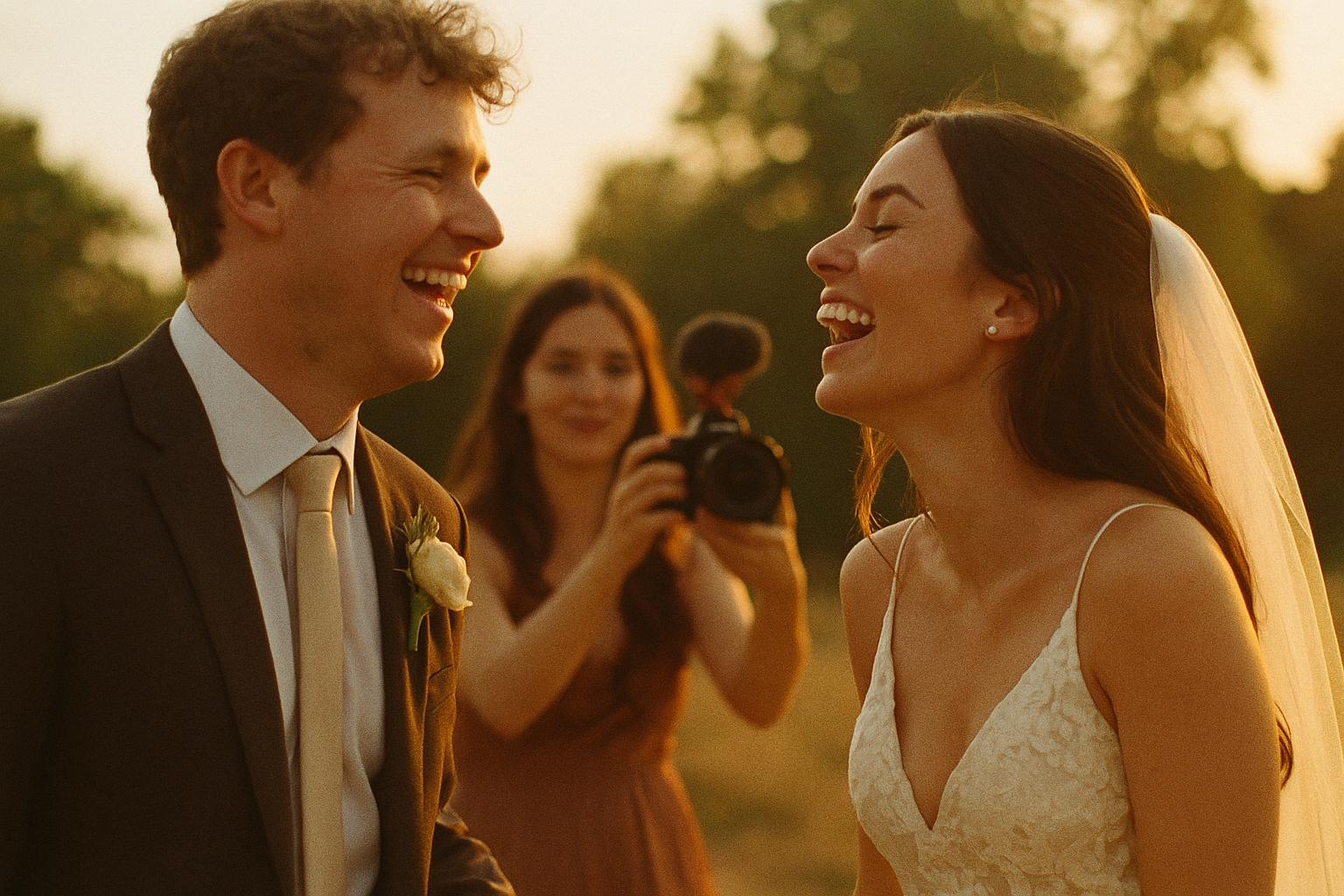
Most couples spend months planning a wedding they barely remember. Not because something went wrong. Because they were so busy performing — smiling at the right moment, hitting every cue, staying on schedule — that the day slipped past them like a dream they couldn't quite hold onto. A wedding content creator doesn't just capture the day. They quietly hand it back to you while it's still happening.
The Problem No One Talks About Until It's Too Late
There's a particular kind of grief that shows up a few weeks after a wedding. The flowers are gone. The dress is boxed. And you're scrolling through your photographer's gallery trying to remember what it actually felt like to be standing in that room. You can see yourself laughing in the photos. You just can't remember what was funny. You can see your partner's face during the vows. But the sound of their voice — the way it caught on certain words — is already fading.
This isn't a memory problem. It's a presence problem. And it happens to almost everyone. When a day is this loaded with meaning and logistics and performance, being fully present is nearly impossible. You're managing everything at once. What you're wearing, who needs to be where, whether your mascara is holding. And underneath all of it, this quiet, persistent awareness that you're supposed to be having the best day of your life — which somehow makes it harder to actually have it.
The couples who feel this most acutely are usually the ones who were most excited beforehand. They did everything right. And still, the day moved too fast.
Why Traditional Coverage Doesn't Solve This
Most couples assume that hiring a photographer and a videographer is the answer. And those professionals do incredible work. But their job is to document the event — the ceremony, the portraits, the first dance, the cake. They're capturing the architecture of the day. The formal record. That's exactly what they should be doing.
What they're not doing is staying close to you during the quiet moments. The in-between spaces. The ten minutes you spend sitting with your grandmother before the ceremony. The way your best friend fixes your veil for the third time and you both start laughing. The moment you slip away with your partner just to breathe for a second before everything begins again. Those moments don't make it onto the shot list. They're not planned. And they're often the ones you'll miss the most.
Traditional videography also tends to produce something meant for later — a polished film you'll watch on anniversaries, something cinematic and complete. Which is beautiful. But it doesn't help you feel present on the day itself. And increasingly, couples want something they can share the next morning, something that captures how the day actually felt in real time. That's a different kind of coverage entirely. You can read more about what makes that possible in this piece on what to expect from a wedding video delivered in 24 hours.
The Real Reason You're Not Present at Your Own Wedding
Here's the reframe most couples need: the reason you can't relax isn't that you're doing something wrong. It's that no one has taken the documentation pressure off your shoulders.
Think about every time you've paused a real moment to pull out your phone. Every time you've broken from a conversation to make sure someone got a photo of it. Every time you've thought, mid-laugh, I should be capturing this. That instinct is costing you the actual experience. And it's not vanity — it's fear. Fear that if you don't catch it, it'll be gone forever.
A wedding content creator steps into that role so you don't have to. They handle the real-time capture. The candid moments. The clips for your stories. The footage that feels alive and immediate rather than staged and formal. When someone else is holding that responsibility, you can put your phone down. You can stop performing for a camera you're mentally managing. You can just be there. That shift — from documentation mode to presence mode — is the actual thing a wedding content creator gives you, and it matters more than any individual clip they produce.
How a Wedding Content Creator Actually Works on the Day
The role looks different from anything else on your vendor team. A wedding content creator isn't setting up lighting rigs or directing formal portraits. They're moving through your day the way a close friend with a good eye would — close enough to catch the real stuff, invisible enough that people forget they're there.
Before the day, a good content creator will talk through your priorities. What moments matter most to you. What platform you're posting on. Whether you want vertical content for Reels and TikTok or something more square-format for a grid post. They'll understand your aesthetic — whether you want something moody and cinematic or warm and candid — and shoot accordingly. That conversation means they're already oriented to you when they show up, not figuring out your vibe on the fly.
On the day itself, they're capturing footage that your photographer and videographer aren't focused on. Getting ready moments with your bridesmaids. The chaotic, funny, real stuff that happens before the ceremony begins. Reaction shots during the vows — not just your face, but your parents' faces, your best friend wiping their eyes. The dance floor at the exact peak of the night. And usually, they're cutting a same-day or next-day highlight edit so that you wake up the morning after your wedding with something ready to share. If you've ever wondered how that's even possible, this breakdown of how to post your wedding video the morning after explains the logistics clearly.
The best content creators also know when to disappear. They're not in your face during the quiet moments. They're not asking you to repeat something for the camera. They caught it the first time because they were paying attention, and that's the whole point.
Does Hiring a Wedding Content Creator Actually Help You Enjoy the Day More?
The honest answer is yes — but not in the way most people expect. It's not that having a content creator makes the day more fun. It's that removing the documentation anxiety creates space for the day to be what it already is.
Couples consistently describe the same experience: somewhere around mid-morning on the wedding day, they realize they've stopped reaching for their phone. They've stopped mentally narrating what's happening in terms of what would make a good post. They're just in it. That's not a small thing. That's the whole thing.
There's also a secondary effect that's harder to quantify but just as real. When you know your day is being captured — genuinely captured, not just formally documented — you carry yourself differently. You linger in conversations instead of cutting them short to stay on schedule. You let yourself feel things instead of bracing through them. You actually look at your partner during the first dance instead of wondering how it's going to look in a photo.
The couples who've experienced this tend to feel strongly about it afterward. What couples say after getting their wedding footage back tells that story in their own words — and the common thread is almost always some version of: I didn't know how much I needed that until I saw it.
There's also the matter of what happens when couples skip this kind of coverage entirely. The regret isn't always immediate — sometimes it surfaces months later, when you're watching someone else's Reel from their wedding and wondering why yours feels so incomplete. That specific feeling is worth understanding before the day, not after. The piece on why some couples regret not booking a wedding content creator is honest about exactly that.
What to Look for When You're Choosing Someone
Not every content creator who shoots weddings is the same, and the difference matters. Look for someone whose existing work actually moves you. Not just someone who produces technically clean clips, but someone whose footage feels like something — warm, alive, specific. The aesthetic should match what you already love, because you can't art-direct your way into a style on the wedding day itself.
Ask how they handle the timeline. A good content creator won't need to be babysat by your planner or constantly briefed on what's next. They'll have studied your day in advance and they'll be oriented. Ask what the delivery process looks like — how quickly you'll get a same-day or next-day cut, what format it comes in, whether they edit for specific platforms. Ask whether they've shot at your venue before, or venues with similar lighting conditions. Candid, natural-light footage lives and dies by how well the shooter reads available light.
And ask what they're like on a wedding day. Personality matters. This person is going to be close to you during some of the most emotionally charged moments of your life. You want someone who's calm, warm, unobtrusive. Someone who doesn't need to be managed. Someone who you'd actually want nearby when you're crying happy tears at the altar.
Ready to Actually Be Present at Your Wedding?
If any of this sounds like what you've been looking for — coverage that gives you your day back instead of pulling you further out of it — we'd love to talk. Effervescent Films specializes in intimate, candid wedding coverage that captures how the day actually feels, not just how it looks. Fast delivery. Warm aesthetic. No posed, stiff, stock-photo energy.
Check Availability and let's figure out whether we're the right fit for your day.
Frequently Asked Questions
What exactly does a wedding content creator do that a photographer doesn't?
A wedding content creator focuses on short-form, candid video content designed for social media — Reels, TikToks, Stories. A photographer is focused on still images and formal coverage. The roles complement each other rather than overlap, and most couples hire both.
How does a wedding content creator help you enjoy the day more?
A wedding content creator takes over the documentation pressure that most couples unconsciously carry — the urge to capture every moment on your own phone. When someone else handles that, you can genuinely be present instead of mentally managing the footage. That shift from documentation mode to presence mode is what most couples describe as the biggest unexpected benefit.
Is a wedding content creator worth the extra cost?
For couples who value real-time sharing and candid, social-media-ready footage, the answer is almost always yes. The question is whether you want to wake up the morning after your wedding with something ready to share — and whether you want to actually remember being there. Both are worth paying for.
When during the wedding day does a content creator shoot?
Most wedding content creators are present throughout the entire day — from getting ready through the reception. They tend to focus on the in-between moments that traditional vendors miss: candid getting-ready footage, reaction shots, dance floor energy, and quiet emotional moments that happen off the formal schedule.
How does a wedding content creator help couples enjoy the day if they're shooting constantly?
The key is that a good content creator is nearly invisible. They're not directing you, interrupting conversations, or asking for re-dos. They observe and capture without pulling you out of what's happening. Most couples forget they're there within the first hour — which is exactly the goal.
How soon after the wedding will I get content?
Many wedding content creators offer same-day or next-day delivery on highlight edits specifically designed for social media. The turnaround varies by creator and package, so it's worth asking before you book. Some couples have Reels ready to post before they even wake up the next morning.